Episode 1
 Discover the exact mindset shifts and actionable frameworks that transformed a basement-dwelling college graduate into a six-figure executive injust four years. This isn’t about shortcuts or luck. This is about the systematic approach ambitious students need to bypass traditional career gatekeepers and build extraordinary success.
At 22, John Scriffiny was living every ambitious college graduate’s nightmare. Fresh out of school with a finance and accounting degree, he found himself in his parents’ basement in Colorado, delivering sandwiches for Jimmy John’s. His mom kept asking the question that haunts countless graduates:”Johnny, you gotta go get a job.”
But John felt something deeper. He calls it “the irritation to yourspirit.” It’s that restless, uncomfortable feeling that ambitious students know all too well. The sense that you’re capable of more, but the path forwardisn’t clear. When John told his graduation party friends about his plans to become an executive within two years, they shut him down: “John, that’snot really how it works in the real world. It’s gonna take you way longer thanthat if you ever achieve it at all.”
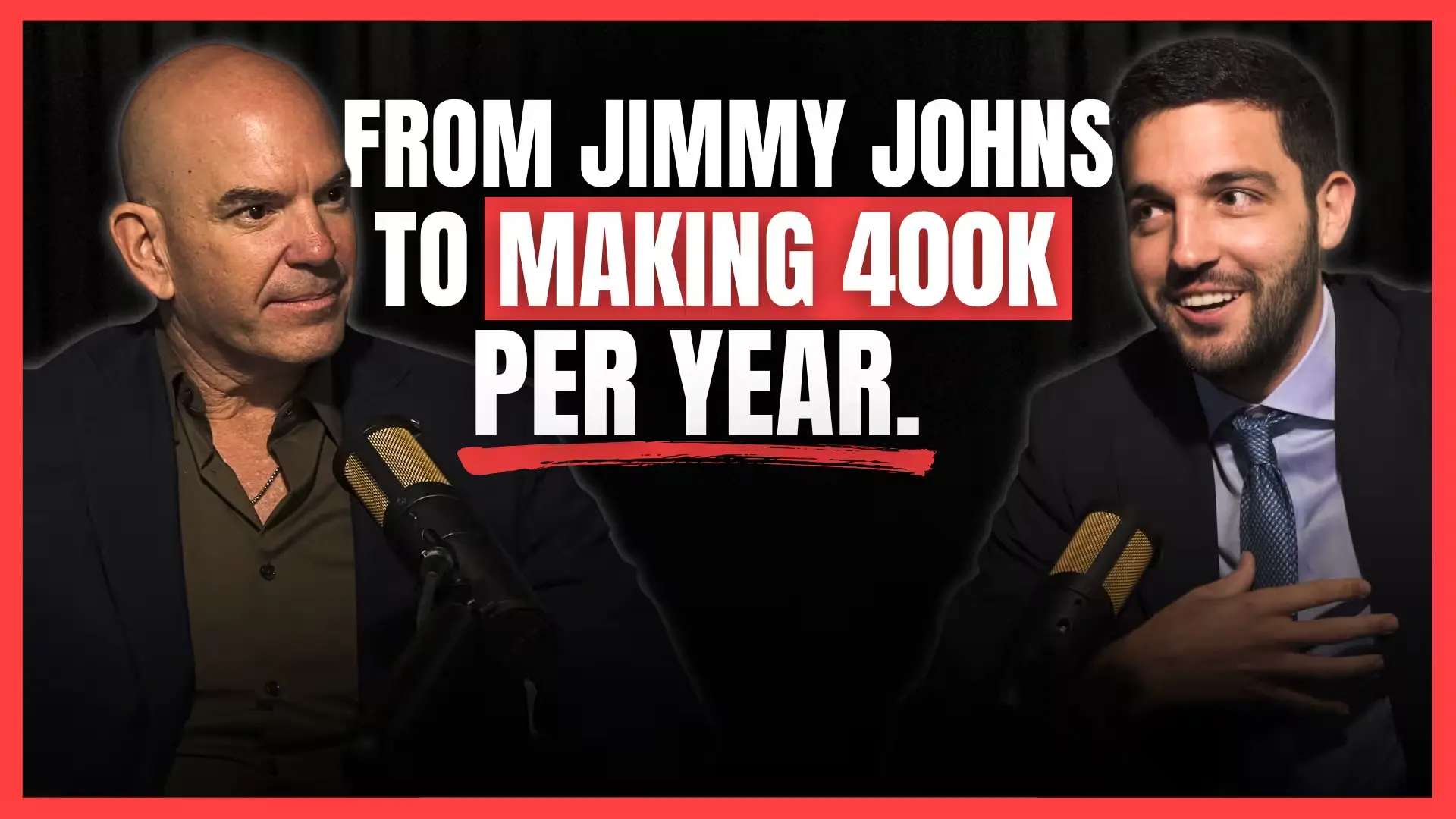
That response confirmed what John already suspected: he needed to get asfar away as possible from the voices telling him to accept mediocrity. Fouryears later, John is making over $400,000 annually as an executive at Florida Financial Advisors, managing a team of 40+ advisors and on track to hitfinancial independence by age 35. His story isn’t just about individual success. It’s a blueprint for how ambitious students can take the power back from institutional gatekeepers.
Ready to bypass traditional career limitations? Explore TTPB’s student-first opportunities and discover how ambitious graduates are building extraordinary careers outside conventional paths.
Watch the full conversation on YouTube or listen on Podbean.
John’s journey began with a fundamental rejection of the college-to-career conveyor belt. “College was not for me at all,” he reflects. “I was kind of miserable in college. I just felt like, what am I doing here? I wanted to drop out like Bill Gates style and do something crazy.”
The breaking point came during interactions with career counselors who offered the standard institutional approach: “Hey, you’re not sure what to do? Here’s three jobs that most people get coming out of here.” This surface-level career guidance missed the mark entirely. As John puts it, “I feel like they start the conversation all the wrong way. I think it should start with: What’s your mission? What are your values? What’s your purpose? What’s your vision for your life?”
Instead of asking “What job do you want to have?”, the conversation should begin with “What life do you want to live? What impact do you want to have?” This fundamental shift in questioning separates institutions that produce conformists from those that unleash potential.
John took a year off to deliver sandwiches and think deeply about “what I wanted my life to look like, how I wanted to conduct myself, and what the actual right way to live was.” That year of reflection, away from institutional pressure and peer influence, became the foundation for everything that followed.
This is exactly why TTPB exists. Traditional career services ask the wrong questions and limit your vision. Discover how TTPB helps ambitious students start with purpose instead of job titles.
When John finally decided to re-enter the job market, he faced the classic crossroads every ambitious graduate encounters. The “safe” path was clear: take an accounting job at Charles Schwab, collect a steady $50,000 salary, and climb the corporate ladder over decades. His mom even suggested he talk to the neighbor who worked there.
“That just made me want to throw up in my mouth a little bit,” John remembers. “To be an executive at Schwab, you probably gotta be there for 30 years, or it’s just impossible.”
Instead, John chose Florida Financial Advisors. This was a commission-based opportunity that offered no guarantees but unlimited upside. The decision terrified his parents. “Johnny, it’s kind of risky to go all the way to Florida. Are you sure you wanna do this?”
John’s response embodied the TTPB mindset: “If you guys wanna support me, great. If not, I’m still gonna go and I’m gonna figure it out.” His parents agreed to support him for six months to get off the ground, but John was prepared to go alone if necessary.
He drove 15 hours to Washington D.C. (after a brief stint in Jacksonville and Miami) with nothing but his car, laptop, and two sets of clothes. He moved into an empty apartment, slept on a blanket, and took showers without a curtain, towel, or shampoo. “I guess I’ll get my hair wet and dry off,” he laughed.
But rather than feeling discouraged, John felt energized. “There’s not a guarantee that this is gonna work out, but it wasn’t something that scared me. It’s something that excited me like this is actually something real.”
John’s rapid ascent from sandwich delivery to executive leadership wasn’t luck. It was the result of implementing specific frameworks and mindsets that any ambitious student can adopt.
At Florida Financial Advisors, John learned about STM. This is a process where you map out your one-year, three-year, and five-year vision. “I look back at what I put on these old STMs and everything I put on there came true,” John explains. “It’s like a wishlist. Whatever you want, just write it down, share it in STM, and boom. It’ll happen.”
This isn’t magical thinking. It’s the power of clarity. When you define specific outcomes and review them regularly, your brain starts identifying opportunities and making decisions aligned with those goals.
John credits much of his success to mastering self-awareness through what he calls “the freeze game.” The technique is simple but powerful: regularly ask yourself three questions:
“Successful lives are predicated on having successful relationships with other people,” John explains. “Successful relationships are really dependent on how well you manage yourself. Managing yourself well comes from making good decisions. Making good decisions comes from self-awareness.”
Building on the freeze game, John uses the “Four Rs” framework:
This framework prevents emotional reactivity and ensures decisions serve long-term objectives rather than short-term impulses.
As John transitioned into leadership, he developed a coaching approach centered on one powerful question: “Why?”
“Sometimes I’ll have a one-on-one with an advisor and I’ll be like, why do you show up to work every day? And they’ll give me an answer and I’m like, well, why? And they give me another answer. I’m like, well, why? I just keep asking until I get to the root of it.”
This relentless pursuit of purpose helps people connect their daily actions to their deeper motivations. This is the key to sustained high performance.
Perhaps most importantly, John embodies what he calls the ultimate differentiator: “I just fcking want it. At the end of the day, I just fcking want it.” This isn’t crude language. It’s raw honesty about the level of desire required for extraordinary results.
“I found like the best way to make a contribution isn’t to go out and help people. It’s first become an absolute beast and then go out and help people, ’cause you’ll be able to help way more people in a much more profound way.”
These frameworks work, but only for students willing to do the work. Join TTPB today and access opportunities that reward this level of commitment and drive.
Today, John manages over 40 financial advisors and has developed a clear philosophy about developing others. His personal mission statement captures this approach: “To achieve significant personal growth so I can contribute to the world and its people.”
He helps his team members write their own purpose statements and mission statements, always starting with the fundamental question: “What’s your why?” Rather than focusing on tactics or techniques, John addresses the foundational element that drives all success—clarity of purpose.
“I try to help people write like a purpose statement or like a personal mission statement,” he explains. This inside-out approach to leadership development reflects the same anti-institutional mindset that launched his own career.
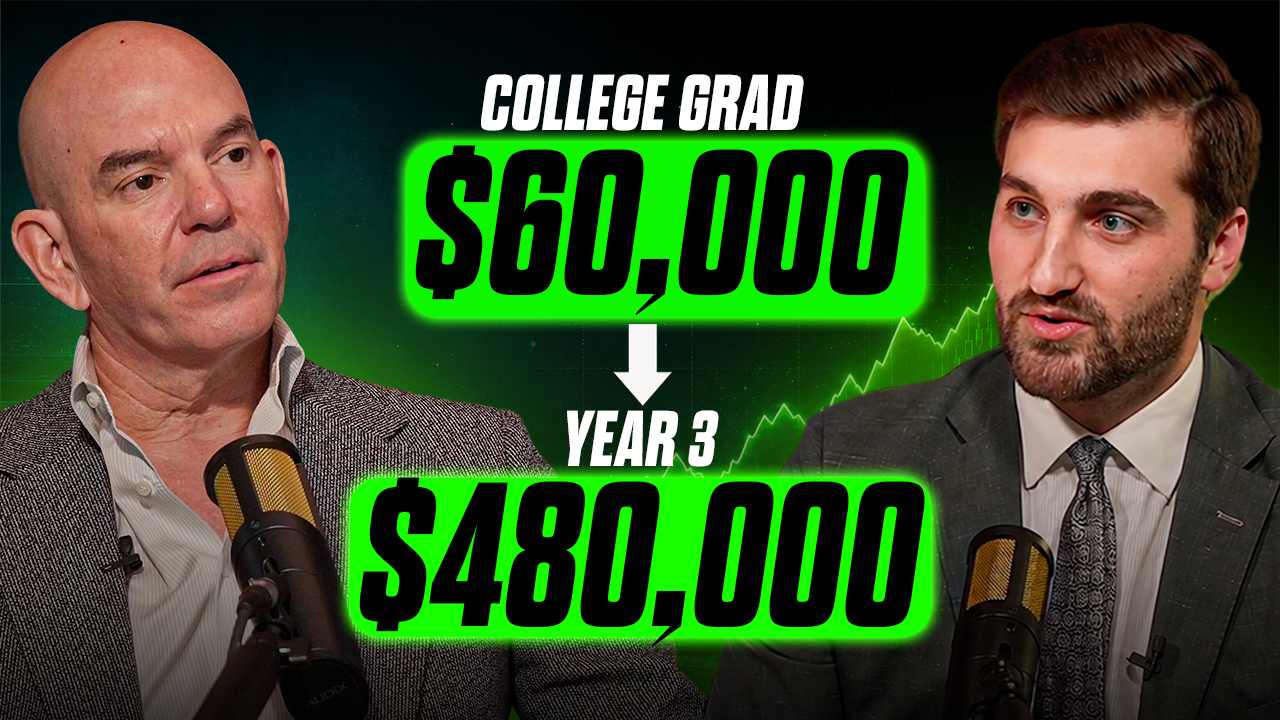
The numbers speak for themselves. In four years, John went from delivering sandwiches to earning over $400,000 annually, with projections of $600-700,000 in the coming year. He’s taken his parents on international trips, built substantial wealth, and is on track for financial independence by age 35.
But the financial results, while impressive, aren’t the complete story. John has become the kind of leader who develops other leaders, someone who can identify and nurture the “irritation to the spirit” in others and help them channel it into extraordinary achievement.
John’s story illustrates a fundamental truth about career success: the biggest risk isn’t taking a chance on an unconventional opportunity—it’s accepting the limitations that institutions place on your potential.
If you’re feeling that “irritation to your spirit,” pay attention. That discomfort isn’t a problem to solve—it’s your potential calling. The question isn’t whether you’re capable of more; it’s whether you’re willing to bet on yourself when everyone around you is counseling caution.
Start by asking yourself John’s fundamental questions:
Most importantly, are you willing to distance yourself from voices that tell you “that’s not how the real world works”? Because as John proved, sometimes the real world needs to be challenged by people bold enough to rewrite the rules.
The power has always been in your hands. The only question is whether you’re ready to take it back.
John achieved executive-level income ($400K+) within four years of starting his career at Florida Financial Advisors. His transformation from college graduate to high earner happened relatively quickly because he embraced opportunity over security and implemented specific success frameworks.
The freeze game is a self-awareness technique where you regularly ask yourself three questions: What am I doing? What am I thinking? What am I feeling? Students can use this to make better decisions by becoming more conscious of their current state before reacting to situations.
Yes, John’s frameworks (vision mapping, self-awareness, embracing discomfort, and finding your “why”) are transferable to any industry. The key is choosing opportunities that offer growth potential over guaranteed comfort, regardless of the specific field.
Ask yourself: Does this opportunity align with your long-term vision? Are you choosing it because it excites you or because it feels safe? John’s rule: if the opportunity scares and excites you simultaneously, that fear often indicates it matters and could lead to significant growth.
“This story was first posted on Take the Power Back on December 9, 2025.”