Episode 4
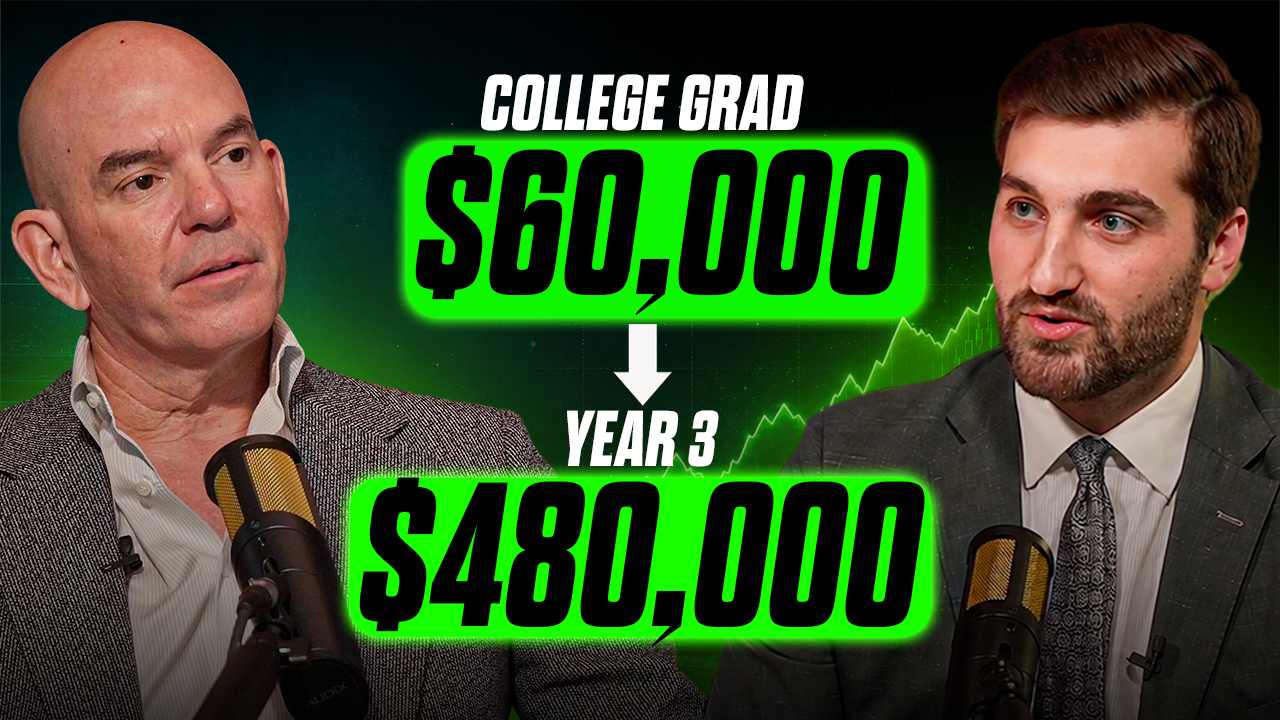
 At 26, Gino had zero finance background and a string of jobs that went nowhere. At 31, hemanages 250 financial advisors across seven offices in five states as SeniorVice President of Florida Financial Advisors. He is the company’s top producer. He just bought his parents their retirement home. His target is $1 million in annual income by 2028.
Five years. That is all it took.
This is not a story about luck or connections. It is a blueprint. Gino started as the first hire at a startup operating out of a cramped coworking space with one bathroom for 45 people. He chose chaos over comfort, commitment over balance, and coaching over ego. The results speak for themselves.
In this episode of the Take The Power Back podcast, Gino sits down with Jason Mickool to break down exactly how he did it. The conversation covers:
Watch the full conversation on YouTube or listen on Podbean.
After graduating from the University of Tampa, Gino did what most graduates do. He took a corporate job at Kforce. The role felt like accounting. He stared at spreadsheets and negotiated rates for foreign-born candidates. On paper, it looked like the right move.
In reality, he was bored by noon every day.
“I think most people were rushing to figure out how to do the job. And once they figured it out, it’s like, how do I do the least amount of work?”
He watched leaders coast. He saw people protect their territory instead of growing. He remembers pretending to look busy so his boss would not pile on more meaningless tasks. It felt wrong. He stayed exactly one year and one day, then quit.
The startup environment at Florida Financial Advisors was the opposite. Early days meant shared coworking spaces. They crammed 25 people into 900 square feet. One bathroom served 45 employees. It was chaotic. It was also where Gino felt himself growing faster than ever before.
“Two weeks of focused work running meetings, I’m like, holy crap, I feel myself sounding way better. The growth was off the charts.”
The lesson is clear. If you want rapid career growth in your 20s, find an environment that challenges you daily. Comfort is the enemy of development. The startup vs corporate job decision is not about culture or perks. It is about whether the environment will force you to level up or let you stagnate.
One of Gino’s most powerful insights is about the timeline for success. What used to take professionals 10 years can now happen in two. Technology and information access have compressed the learning curve dramatically.
But here is the catch. You have to actually commit.
“There is no ‘but’ in commitment. It’s not, ‘Yeah, I’m gonna work hard from eight to five, but I’m still gonna go drinking on the weekends, still gonna be spaced out on Monday.’ That’s not commitment. That’s just working a regular job.”
Real commitment means sacrifice. It means staying late. It means going to bed early. It means treating your early career like business bootcamp. Gino worked 12-hour days regularly. But he frames it differently than most people would expect.
“I worked a 12-hour day and it didn’t really feel like a burden. If you do something you love, if you love the people you work with, it doesn’t feel like sacrifice.”
The math is simple. Give two to three years of intense, focused commitment in your 20s. You can achieve what takes others a decade or more. Skip that commitment and you may spend 20 years never reaching the level you wanted.
“The best time to do it is in your twenties. When you have no responsibilities, when there’s really nothing on your plate, that’s the time you need to invest in your personal growth.”
When asked what advice he would give to someone who wants his job, Gino does not hesitate. Be coachable.
This is not generic advice about being open to feedback. Gino means something more radical. Zero ego at every level, even after success.
“When I say be coachable, it’s no ego at any level. I see it sometimes with people who get a promotion or have success, and they stop being coachable. You have to be coachable always.”
Gino still gets coached today. He works with an executive coach who helps him navigate the challenges of leading experienced professionals. The questions have evolved from “how do I run a meeting” to “how do I develop someone who thinks they’re a level four leader but is actually a level two.” The learning never stops.
Learning how to be coachable requires swallowing your pride. It means taking feedback even when you think you know better. It means watching people you thought were more talented than you fail because they could not stay humble.
“I’ve seen successful people, people I thought are way smarter than me, way more talented than me, run at the first sight of adversity. If that person had only stayed a little bit longer, had they just kind of sucked it up… They taught me not to be that way.”
Gino’s path was not a straight line up. There was a moment when he was passed over for a promotion he believed he deserved. The Tampa market leadership role went to someone else.
He could have quit. Many people do.
Instead, when asked to relocate and prove himself in a different market, he said yes. He took over a thriving organization and made it even better. Eventually, the Tampa role came back around. He earned it.
“I didn’t want to be the kind of person where, if things get tough, you just run. Am I leaving because I have a challenge in front of me, or am I leaving because I truly want something else? If it’s just a challenge, you don’t let those challenges define you. You let those challenges shape you.”
He also thought about the future. What kind of father would he be if he ran from adversity? What kind of husband? The setback became a proving ground for the leader he wanted to become.
The results speak for themselves. Today, 11 of the company’s 19 VPs came through the Orlando office during Gino’s leadership. He did not just succeed individually. He built a factory of leaders.
Gino operates on a five-level leadership framework that every ambitious professional should understand.
Level 1: You can do the job when someone tells you how.
Level 2: You can do the job and identify problems.
Level 3: You can do the job, identify problems, and come up with solutions. This is where you become valuable.
Level 4: You can do all of the above plus mobilize a group of people and tie it back to mission, vision, and values.
Level 5: You can develop other Level 4 leaders.
The gap between Level 3 and Level 4 is where most people get stuck. They know how to solve problems. But they cannot rally others around a shared mission. They bring complaints instead of bringing people together.
“The best leaders can get a bunch of people in a room and get them to drive one result together. Instead of just telling people what to do, you lead people to do it together.”
Gino also emphasizes a principle he calls “inspect what you expect.” Leaders who assume their team is performing well without actually watching them work are setting themselves up for failure. Get close to the work. Observe. Give live feedback. Demonstrating a skill once is not enough. You have to confirm it is being executed correctly over time.
One of the most revealing parts of Gino’s story involves his fight with his own alma mater. The University of Tampa refused to post Florida Financial Advisors jobs on Handshake, the university career services platform.
Think about that. A graduate of their program, now a senior vice president managing hundreds of people, could not get his company’s opportunities in front of current students. Career services decided the jobs were not the right fit. They never asked students what they wanted.
“What do these people know? What do they know about the career? What do they know about finance? They’re deciding what’s best for students without letting students decide for themselves.”
He did not accept it. He emailed the dean relentlessly. He showed up in person. He asked pointed questions that career services could not answer. Eventually, he got the company back in good standing.
But this is not just a University of Tampa problem. It happens at schools across the country. JMU. University of Miami. University of New Hampshire. Countless others. Students never know the opportunities being filtered out on their behalf.
“I would think parents would want to know that all jobs their kid could get are being posted. Not filtered. Not some person with no experience deciding what’s best for my student.”
This is exactly why career services alternatives like TTPB matter. When institutions act as gatekeepers, students need direct paths to opportunity. They need platforms that connect them with employers without someone else deciding which jobs are worthy of their attention.
At 31, Gino has built a life most people spend decades chasing.
He owns three properties, including a home he purchased for his parents. He manages a market of 250 advisors. He is on track to earn $1 million annually by 2028. He just welcomed his first child, and has the flexibility to be present for every milestone.
“I was able to accomplish life goals at a young age. I always wanted to buy my parents their retirement home. Did that at 31.”
None of this happened by accident. It happened because he chose growth over comfort. He stayed coachable when his ego told him he knew better. He committed without conditions. He refused to let setbacks define him.
The path is available to anyone willing to walk it. Join the Take the Power Back movement and get ahead.
It depends on your priorities. If you want rapid growth, broad skill development, and direct impact, a startup will challenge you more. Corporate jobs offer stability and structure but often have slower advancement. Gino found that corporate culture encouraged people to do the minimum. His startup environment forced constant improvement.
Being coachable means having zero ego about your abilities. It means actively seeking feedback and applying what you learn. It is not just listening to advice but implementing it. Coachability is especially important after success, when many people stop learning. The best professionals stay coachable throughout their entire careers.
Gino recommends a minimum of two to three years of full commitment. What used to take 10 years can now happen in two because of technology and information access. However, this requires genuine commitment. That means sacrifice, long hours, and consistent effort. Not just showing up and going through the motions.
Invest heavily in personal growth while you have minimal responsibilities. Stay coachable with zero ego. Find an environment that forces you to develop new skills constantly. Commit fully without conditions or excuses. Your 20s are the optimal time for intensive career development because you likely have fewer obligations than you will later in life.
Level 4 leadership means you can perform your job, identify problems, develop solutions, and mobilize a group of people around a shared mission, vision, and values. It goes beyond individual contribution to rallying others toward collective goals. Level 5 leadership is the ability to develop other Level 4 leaders.
“This story was first posted on Take the Power Back on December 9, 2026.”