Episode 2
 Who gave you your career advice? Your parents who played it safe? A guidance counselor who never built anything? Friends already settling into capped salaries and predictable ceilings?
Justin Barbato decided to ignore career advice from people who settled. That decision helped him become an executive in his 20s.
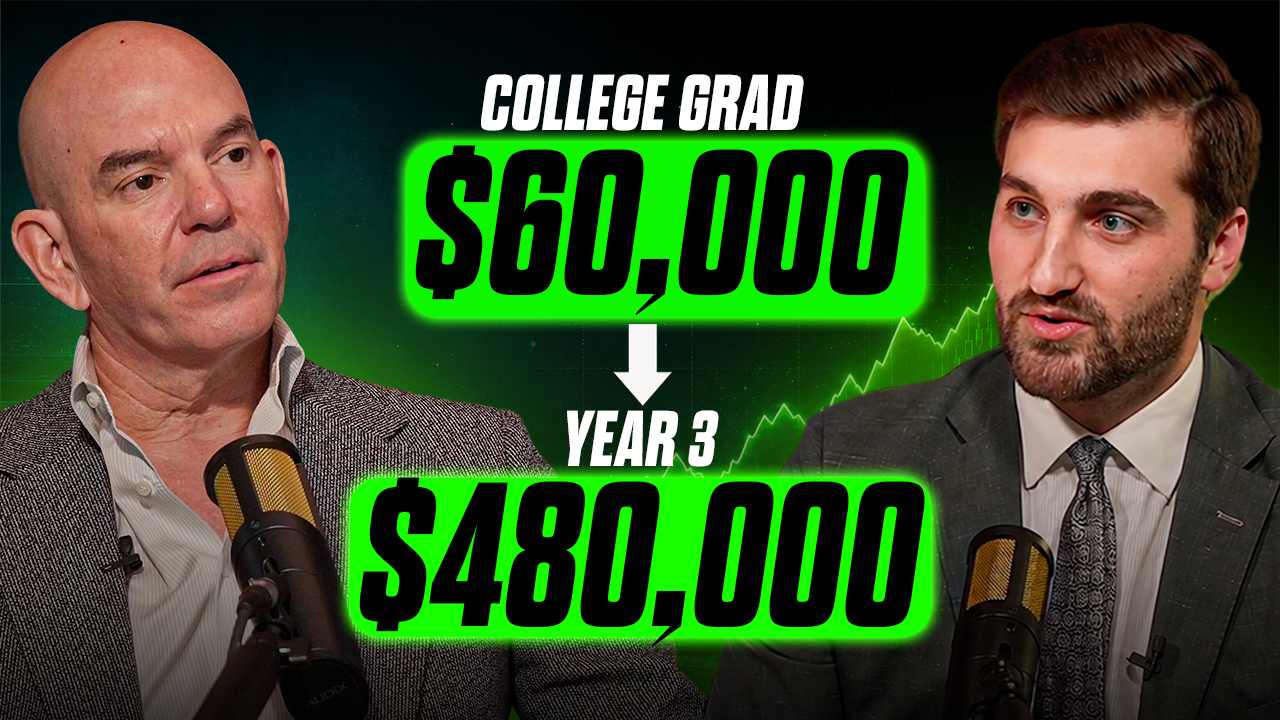
At 25, Justin is a Regional Vice President in Charleston, South Carolina. He built a 27-person team from scratch in 10 months, the fastest regional start in his company’s history. His income this year: $225,000, with projections toward $350,000 or more next year.
In this episode of Take The Power Back, Justin shares:
Hear the complete conversation with Justin Barbato on the Take The Power Back podcast:

Justin grew up in a Connecticut suburb with supportive parents, a dad who was a schoolteacher, and a childhood full of baseball. He was good at sports, comfortable in his routine, and honest enough to admit he never worked exceptionally hard because he never had to.
He went to Coastal Carolina University, played club baseball, and studied finance. Why finance? Because his dad said he could make good money in it. That was the extent of his career planning.
Sound familiar? Most students pick careers the same way: vague promises of income, parental suggestions, or whatever feels least uncomfortable.
Then Justin heard something that changed how he thought about success:
“If your circle doesn’t allow you to grow, it’s not a circle. It’s a cage.”
Loving parents who counsel caution aren’t bad people. Friends who took safe jobs aren’t failures. But if you’re taking advice exclusively from people who haven’t achieved what you want, you’re building a cage around your potential and calling it a support system.
TTPB exists because traditional career services put students in cages. We connect ambitious students directly with opportunities that match their hunger.
Justin played baseball his entire life. It shaped who he became, but not for the reasons you might expect.
“The biggest thing would be structure,” he explains. “Practice was at this time. Game was at this time. If you wanted to perform, you had to prepare a certain way.”
He distills this into three principles that transfer directly to career success:
Time management isn’t about productivity hacks. It’s about understanding the outcome you want and building the framework to get there.
Justin lives by what he calls a “model week,” where every hour has a purpose: personal development, team development, presentation prep, and even marathon training. Nothing is left to chance.
In baseball, you never wing it. You know exactly where to throw based on the situation because you’ve practiced it hundreds of times. Justin applies the same discipline to client meetings, presentations, and difficult conversations.
Justin has heard stats claiming 80% to 95% of success is just showing up. The catch? Showing up prepared is what separates performers from everyone else.
Coming out of college, Justin applied to 25 jobs as a financial advisor. Twenty-four were in Charleston, where he wanted to live. One was in Jacksonville, Florida. Guess which one called back?
He had an honors degree and led his club baseball team as president. None of that mattered to the 24 Charleston employers who passed on him.
Most graduates would keep waiting for the “right” opportunity or take a safe local job. Justin did neither. He moved to a city he’d never visited and bet on himself. Looking back, he calls it the best decision of his life.
The lesson? Sometimes the opportunity you didn’t want becomes the one that changes everything.
What made Justin’s trajectory so fast? He was promoted early, moved into leadership, and eventually got tapped to open the Tristate Financial Services Charleston office he’d always wanted.
His senior VP, Tommy Nickerson, saw something in him. When asked what Tommy recognized, Justin’s answer is disarmingly simple:
“I was smart enough to be dumb enough to do everything that Tommy told me to do.”
That’s not blind obedience. That’s strategic humility. Justin identified someone living the life he wanted and executed exactly that playbook.
The question isn’t whether you’re capable of following a proven path. It’s whether your ego will let you.
Finding the right mentors and opportunities isn’t luck. TTPB’s incubator connects students with leaders who’ve built what they want to build. Learn about the incubator.
Two years into his career, Justin was thriving. Then an opportunity came to move to Charleston as an executive and build an office from scratch.
His mom’s reaction? “Are you sure that’s really what you want to do?”
She thought he already had it all. But Justin recognized something crucial: his parents never took the crazy risk. They’re wonderful people, but not the right source for advice about building an unconventional career. Love and expertise are different things.
When asked what advice he’d give college students trying to figure out their path, Justin offers three principles:
Ask yourself: In five, ten, or twenty-five years, what does your life look like? What does a day worth repeating look like? Write that vision down before choosing a career path.
Find someone who lives the life you want to live. Not someone who talks about success, but someone who’s actually living it. Then be humble enough to follow their playbook.
Success is never easy. You have to choose something hard. The earlier you make that choice, the more freedom and opportunity you create. The longer you wait, the harder it becomes.
Justin draws a comparison to compound interest: the earlier you start building something meaningful, the longer it has to grow. Starting at 22 gives you decades more runway than starting at 35.
Justin’s numbers are impressive: $225,000 at 25, with projections of $350,000 or more next year. But when he talks about success, money isn’t his metric.
“Every single day my life gets better. As long as that keeps happening, I’m happy.”
His parents are proud now. They want to move closer to him. In ten to fifteen years, he wants the freedom to coach his kids’ teams, attend every recital, and live life on his terms.
That freedom comes from making hard choices early and escaping cages disguised as circles.
It starts with a simple decision: ignore career advice from people who settled.
Ready to connect with opportunities that match your ambition?
Justin combined three elements: a willingness to take calculated risks (moving to Jacksonville when he wanted Charleston), strategic mentorship (following his senior VP’s exact playbook), and disciplined execution (model week, time management, consistent preparation). At 25, he runs a 27-person team and earns over $225,000 annually.
Justin applied to 25 jobs and got one offer in a city he’d never visited. Instead of waiting for the “perfect” opportunity, he took what was available and turned it into his launching pad. His lesson: sometimes the opportunity you didn’t want becomes the one that changes everything.
Justin identifies three transferable disciplines: prepare with intentional time management, practice until execution becomes automatic, and show up prepared when it counts. These principles from baseball directly shaped how he approaches leadership and team building.
A model week is a template for how you allocate your time across priorities. Justin blocks hours for presentations, personal development, developing others, and personal goals like marathon training. The key is scheduling your priorities rather than prioritizing your schedule.
“This story was first posted on Take the Power Back on December 10, 2025.”