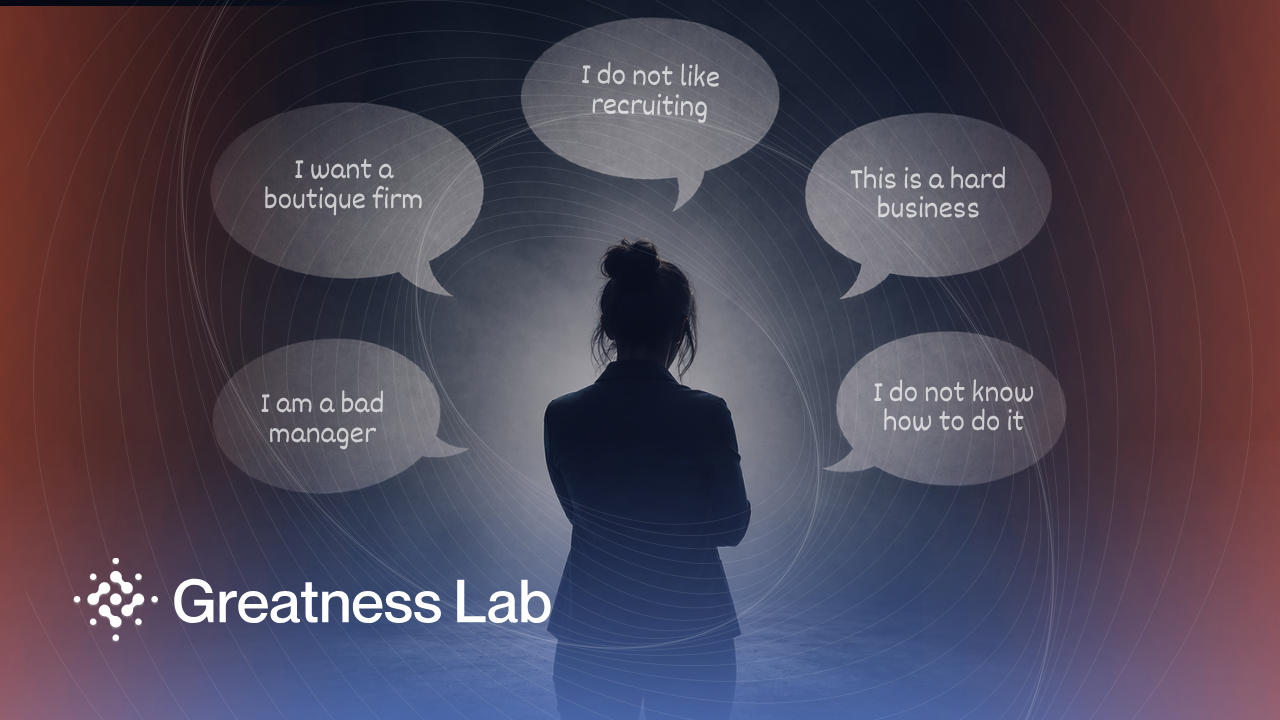
Most advisors who own a practice producing $200,000 to $500,000 in revenue do not have a production problem. They have a scaling problem, and it shows up the moment they try to hire.
The pattern repeats across firms. The founder is doing real work at real volume. Clients are happy. Revenue is stable. But hiring the next advisor runs into resistance every time. The process stretches across weeks, the candidate pool stays thin, and the new hire often underperforms or leaves within two years. The founder concludes that good advisors are hard to find and goes back to producing.
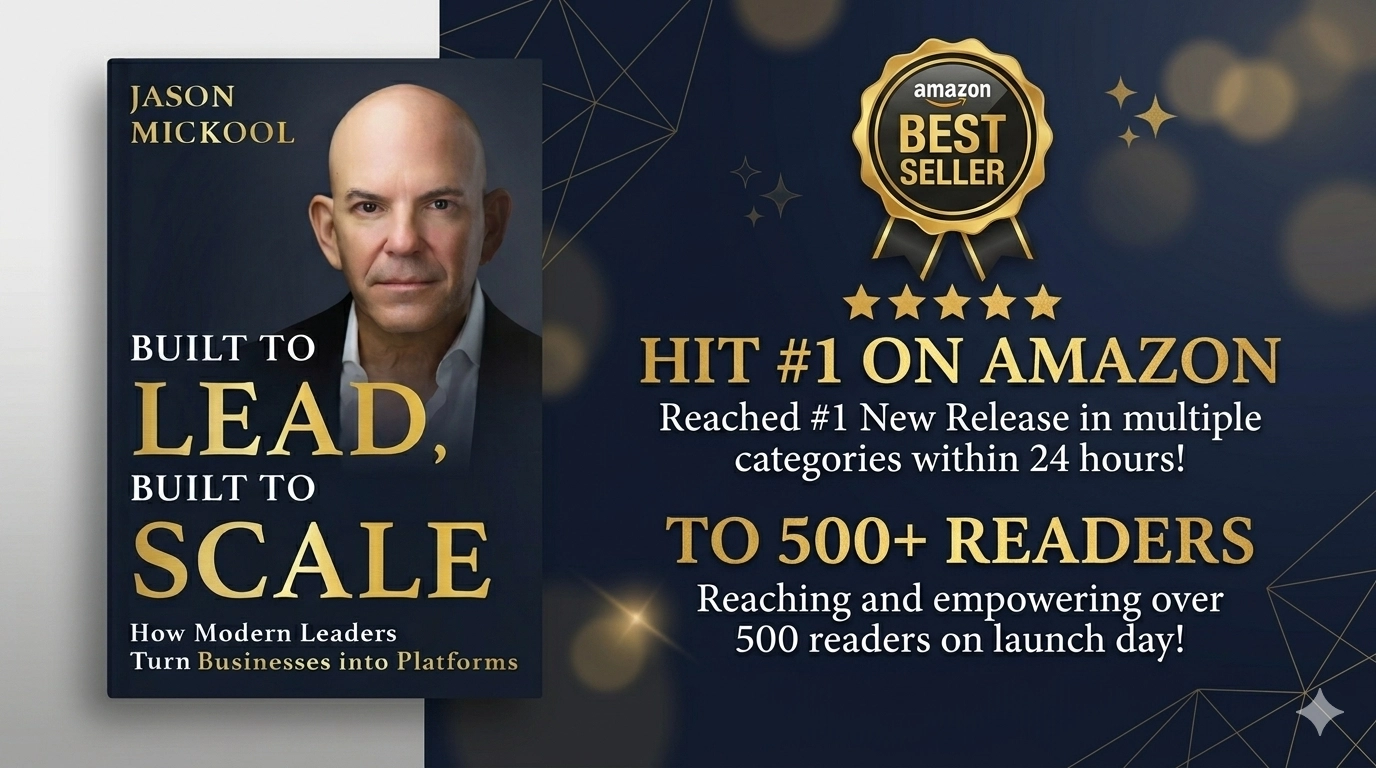
The diagnosis is wrong. In most advisory firms, recruiting, training, and development are founder-dependent tasks. Firms that scale past solo production run their people function with the same rigor they run client service or compliance. Jason Mickool built a 700+ advisor enterprise using that principle. He launched Greatness Lab alongside Coach Micheal Burt , the Wall Street Journal bestselling author and founder of The Greatness Factory. The goal was to make the model available to advisors who want the scale without the decade of trial and error.
Takeaways
- Recruiting is a system that runs without the founder in every seat.
- Hire for eagerness and coachability; train readiness from there
- Group interviews convert founder time into hiring velocity
- Experiential training is where real skill forms
- A people system turns a lifestyle practice into a transferable business
The Two Formulas That Decide Whether a Practice Scales
A financial advisory firm that scales runs on a different formula than one that produces. The success formula is activity times conversion times case size. It defines personal income, and it has a ceiling. Once activity saturates the calendar, growth stops.
The scale formula adds one multiplier. The multiplier is the number of people inside the firm who can run the success formula with the founder’s discipline. That multiplier separates a lifestyle practice from an enterprise.
Building the multiplier is an operating problem. Recruiting, training, and development have to run as an integrated function that produces qualified advisors on a cadence. A string of one-off hires cannot produce the consistency the scale formula requires.
The pattern that keeps talented advisors stuck at solo production is one-at-a-time recruiting. Post a role, sort resumes, interview candidates serially, meet someone half-impressive, hope it works out. That pattern also explains why so many firms plateau long past the point where the founder is ready to move forward.
The shift begins with treating recruiting as a system the firm operates. The firm runs recruiting the same way it runs client service or compliance.
The Blue Marlin Strategy: A Faster Way to Build an Advisor Team
Most advisory firms copy the same playbook when they want to grow. Chase the $1 million to $2 million producer who already has a book. Pay a signing check. Hope to absorb the revenue.
This is the blue marlin strategy. Everyone is fishing in the same spot, casting at the same fish, with the same bait. A proven producer with an existing book is a target for every IMO, broker-dealer, and RIA in the country. The competition drives the offer up. By the time a firm wins one, the signing cost has compressed the margin. The team still has to repaper 4,000 client accounts to move the business over.
Then the relationship has to work. The culture has to fit. The production has to hold through the transition. Most of the time, at least one of those breaks, and the recruit quietly leaves inside of two years.
There is a better way to grow, and it does not start with chasing the fish everyone else is chasing. It starts with finding committed, qualified, and coachable people whose vision aligns with the vision of the firm, and then building a system around them. This is what advisor recruiting and onboarding looks like when it is built as an operating function instead of a series of one-off hires.
Coach Burt has a phrase for the pattern of buying into the old playbook. He calls it the accidental arrogance of success. You have had some success, so you assume the path that got you here is the path that takes you forward. It usually is not.
Eagerness Over Readiness: The Hiring Principle Behind a 700+ Advisor Enterprise
The single most important hiring principle at Greatness Lab is a phrase most firms have never considered. We hire for eagerness over readiness, and we train readiness.
Eagerness looks like hunger to grow, willingness to learn, coachability, and alignment with the mission and values of the firm. Readiness looks like experience, licensure, polish, and an existing book. Most firms hire for readiness because it is easier to evaluate and feels lower risk. The problem is that readiness rarely translates to retention, and it rarely produces the cultural fit that compounds over years.
Greatness Lab built its recruiting around the Enterprise Rent-A-Car model. Anyone who has rented a car from Enterprise remembers the same thing: consistency. The people are young, friendly, well-trained, and on a clear pathway. They are not selling you. They are trained. Enterprise has been one of the best training organizations in the country for decades. The company hires into a leadership pipeline and develops people toward regional manager, district manager, and senior vice president roles.
Greatness Lab applies the same architecture to financial advising. The first interview establishes the pathway. This is how you grow, these are the stock options, this is the compensation ladder, this is the path to leadership. A 25-year-old in the right organization can earn $500,000 to $600,000 a year plus equity within a few years. They did not arrive ready. The system trained them into readiness.
This is also what separates a firm that scales from a firm that plateaus. The plateau firm is always developing leaders one at a time, ad hoc, based on whoever happens to be in the seat. The scaling firm has a pipeline, and the pipeline runs whether the founder is watching or not.
See How Greatness Lab Runs Advisor Recruiting
Explore the Recruiting and Onboarding service that manages sourcing, career previews, interview flow, and pipeline management. You gain hiring velocity without absorbing the overhead of building a recruiting function from the ground up.
Recruiting as a System: Group Interviews and Self-Selection at Scale
Here is where most advisors make the same mistake. They imagine recruiting as one-on-one interviews stacked on their calendar, forever. It is why hiring feels impossible. The math does not work.
Picture an advisor holding one hour a day for interviews. If each interview takes 30 minutes, that is 10 candidates per week. In a normal hiring cycle, most of those conversations lead nowhere. After three months of effort, the advisor has maybe one hire, and they are worn out.
Now picture a system where four interviewers work that same hour in parallel. Four candidates at once. 40 candidates in one hour of total founder time. The founder is no longer the interview. The founder is the hiring committee.
This is what Greatness Lab runs at scale. A sourcing department posts roles, manages inbound resumes, and runs career preview sessions where 10 to 20 candidates per location see the opportunity together. The preview is transparent about the company, the culture, the fit, the compensation, and the training pathway. Candidates who do not see themselves in the picture select themselves out. Candidates who do are invited further into the pipeline.
The system does not require the founder to be present for every conversation. It requires the founder to have defined the vision, values, and standards with enough precision that a team can execute the filter. That is business infrastructure applied to people, and it is the single largest leverage point in a growing firm.
A Step-by-Step System to Recruit and Train Financial Advisors at Scale
Building a recruiting and training engine requires a repeatable process. The firms that scale do not improvise hiring. They follow a defined sequence that runs consistently.
Step 1: Define the Ideal Candidate Profile
Start with clarity. Identify traits that align with long-term success: coachability, competitiveness, communication ability, and alignment with the firm’s values. Avoid over-indexing on prior experience.
Step 2: Build a Consistent Sourcing Engine
Use multiple channels to create steady candidate flow:
- Job boards and LinkedIn outreach
- University recruiting pipelines
- Referral programs from current advisors
The goal is volume with quality filtering, not one perfect candidate.
Step 3: Run Career Preview Sessions (Group Format)
Introduce candidates to the opportunity in a structured group setting. Cover:
- Compensation model
- Growth path
- Expectations and performance standards
This stage allows natural self-selection before deeper interviews.
Step 4: Implement Structured Group Interviews
Move qualified candidates into group interviews with multiple evaluators. This:
- Increases speed
- Reduces founder dependency
- Improves hiring consistency
Step 5: Standardize the Onboarding Process
Every new hire should enter the same onboarding system:
- Licensing roadmap
- Daily activity expectations
- Shadowing and mentorship
Consistency here directly impacts retention.
Step 6: Deploy Experiential Training Loops
Training must be tied to real activity:
- Client meeting participation
- Role-play sessions
- Live feedback from producing advisors
Skill develops through repetition and correction, not theory.
Step 7: Track Performance and Progression
Measure:
- Activity levels
- Conversion rates
- Time to first revenue
A visible scoreboard creates accountability and accelerates development.
This system removes randomness from hiring and replaces it with predictable output. Over time, it becomes the engine that drives firm-wide growth.
How Experiential Training Turns Hires Into Producers
Recruiting the right person is the beginning. Training that person into readiness is what turns a hire into a producer.
Real development is mostly experiential. Roughly 70 percent of skill acquisition happens through doing the work, with reading playing a smaller role. No one reads their way to mastery in this business. No test converts an aspiring advisor into a skilled one. The only path is a clear progression: student, practitioner, master.
This approach aligns with widely accepted learning frameworks such as the 70-20-10 model, where approximately 70 percent of learning comes from on-the-job experience, 20 percent from mentorship, and 10 percent from formal education. In performance-based roles like financial advising, experiential exposure consistently outperforms classroom-only training.
That progression depends on proximity. You have to be around people who are already operating at the level you want to reach. The Greatness Lab community and collaboration model is built for that. New advisors get daily access to producing leaders, live examples of the work, and real feedback on real client situations. Quarterly coaching calls from someone who has not done the work in a decade cannot match that kind of exposure.
The Greatness Lab training platform exists for the same reason. Most firms attempt to build training infrastructure from scratch. Few execute. Advisors who join Greatness Lab plug into a proven system that has already moved $600 million of annuity business through it. The firm keeps its brand, its clients, and its economics. It gains the development engine.
From People Machine to Enterprise Value: What the System Produces
A recruiting and training system produces something more durable than advisor headcount. It produces enterprise value.
Consider the DC branch of the Greatness Lab network. Built from the ground up in under two years, it reached 53 advisors. Annuity production topped $70 million. Financial plans delivered exceeded 1,000. That did not happen because the leader there is a once-in-a-generation producer. It happened because the office plugged into a proven recruiting pipeline, a proven training pathway, and a proven development model. The people machine produced the result.
The same pattern runs inside Financial Gym Advisors. This New York City firm joined the Greatness Lab ecosystem after plateauing and beginning to lose revenue. Within a year, the partnership identified more than $130 million of client opportunity and more than $5 million in annual revenue potential. It also stood up a recruiting department the firm did not have before.
The second compounding effect is case size. An advisor who earns $300 per Medicare transaction cannot build a $100 million firm on that math. The same household that buys Medicare has multiple financial needs. They have a 401(k) to roll over, a home to insure, a car policy, a mortgage, and a tax return. The question is how to become the go-to for the full household.
This is the casino model. Casino reward programs exist because operators recognized that the economic lever is the return visit. Getting a first-time guest to come back four times is what drives lifetime value. Research on New York City restaurants shows a similar pattern. When a first-time diner returns four times, loyalty jumps from about 23 percent to more than 75 percent. The fourth touch is the hinge. Apply that logic to a household and case size compounds on its own.
All of this builds culture as an asset and, over time, a sellable financial advisory practice. A firm that depends on the founder for every hire, every training, and every client relationship is a job. A firm that has a people system producing results without the founder is an enterprise.
Join a Live Greatness Lab Event
Three or more live sessions every month on independence, growth at scale, coaching, and community. See the workshops and live streams where Jason and Coach Burt break down the operating system in real time.
The Transition From Lifestyle Practice to Transferable Enterprise
The moment a firm stops depending on the founder for hiring, training, and development is the moment it becomes a real business. Before that moment, the founder is a highly paid employee of a practice they happen to own. After that moment, the founder is a business owner with an asset.
This is the difference between a lifestyle practice and an enterprise. A lifestyle practice produces a good income and ends the day the founder stops showing up. An enterprise produces income that continues, grows, and can be sold on the founder’s terms.
Building that kind of business alone takes most advisors a decade. Building it with the infrastructure, coaching, and community already in place takes a fraction of that. This is the reason Greatness Lab membership exists. The people system is already built. It is available to advisors who want the scale without the years of trial and error.
The advisors who make the shift stop treating recruiting as a side task. They treat it as the core of the business they are building. Those firms scale, hold value, and give the founder a clean exit on terms they set themselves.
Talk With the Greatness Lab Team About Partnering
Schedule a conversation to explore whether the Greatness Lab platform is the right fit for your next chapter of growth. Bring your current recruiting and training picture. We will walk through what a system looks like for your model.
Where to Find Financial Advisor Candidates
Firms that scale recruiting treat sourcing as an ongoing function, not a one-time effort. Common high-performing channels include:
- University and early-career programs for entry-level talent
- LinkedIn and professional networks for lateral candidates
- Employee referral programs for culture-aligned hires
- Industry events and workshops to attract career-switchers
Diversifying sourcing channels increases both candidate volume and quality, while reducing reliance on any single pipeline.
Questions Advisors Ask About Scaling a Financial Advisory Firm
How do I scale my financial advisory practice beyond solo production?
Scaling a financial advisory practice beyond solo production requires a shift from the success formula to the scale formula. The success formula is activity times conversion times case size, and it defines personal income with a natural ceiling. The scale formula adds one multiplier. That multiplier is the number of people inside the firm who can run the success formula with the founder’s discipline. To move past solo production, the advisor must build a recruiting, training, and development system. That system runs as an integrated operating function of the business. The firms that scale past $1 million to $20 million and beyond share a pattern. They run recruiting as an operating function, freed from the founder’s calendar.
Is it better to recruit experienced financial advisors or hire for potential and train them?
Hiring for potential and training eager, coachable candidates scales faster and retains better than recruiting experienced producers with existing books. Established $1 million to $2 million producers are targets for every IMO, broker-dealer, and RIA in the country. The competition drives up acquisition cost, compresses margin, and creates operational drag from repapering thousands of client accounts. Hiring for eagerness (hunger to grow, coachability, values alignment) and training that person into readiness produces higher retention and stronger cultural consistency. Greatness Lab built a 700+ advisor enterprise using this principle. Advisors who started as entry-level hires reached $500,000 to $600,000 a year plus equity within a few years.
How long does it take to train a new financial advisor to full production?
Training a new financial advisor into full production requires a pathway. Advisors move from student to practitioner to master. Proximity to producing leaders matters at every stage. Roughly 70 percent of skill acquisition in advisory work happens through experience. The timeline depends more on exposure density than on curriculum length. Inside a proven system, new advisors can move from hire to positive revenue contribution within five to six months. The training pairs daily access to producing leaders with live workshops like the annuity operating system intensive. Advisors also get real-time feedback on the client work they do every day. The Greatness Lab DC branch used this model to go from zero to 53 advisors in two years. Annuity production topped $70 million in that same window.
How do I know if my advisory firm has a recruiting problem or a system problem?
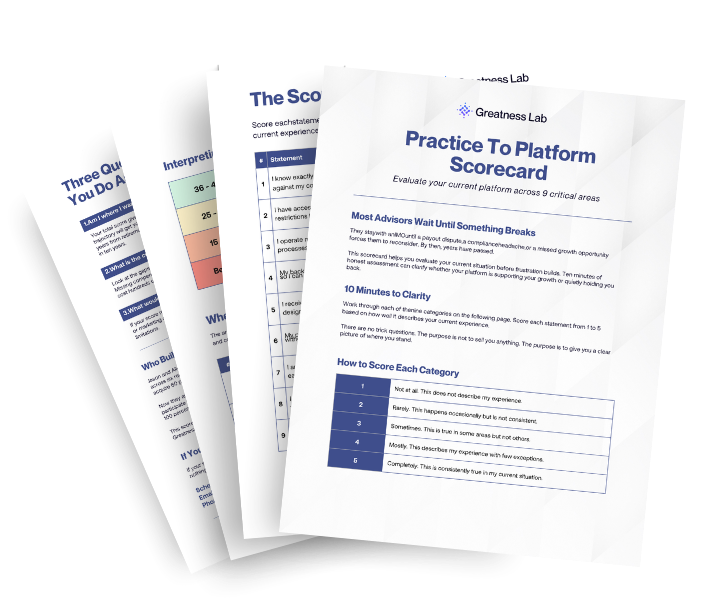
Most firms discover they have a system problem when they notice recruiting feels personal, slow, and founder-dependent. If hiring stops the moment the founder stops making calls or sitting in interviews, that is a system problem. If the founder is the only person who can evaluate a candidate against the firm’s values and standards, that is a system problem. If the firm has tried to hire several times and concluded the market is thin, that is a system problem. The firm is misdiagnosing it as a market problem. The Practice Check-Up is a 10-minute diagnostic that highlights where a firm’s people, process, and operating gaps surface first.
About the Author
Jason Mickool, Founder and CEO of Greatness Lab
Jason Mickool built Florida Financial Advisors from a kitchen-table conversation into a 700+ advisor enterprise spanning 27 locations in 18 states, with over $100 million in annual revenue. He completed a transaction valued at over $100 million. Today he works inside the Greatness Lab coaching model with financial advisors who want to build, scale, and exit their own practices on their own terms. He is the architect of the Annuity Operating System and the Build to Exit framework.